ArtemisBirds, Insects, Arachnids, Mammals, and other members of the animal kingdom. And a little bit about each image.
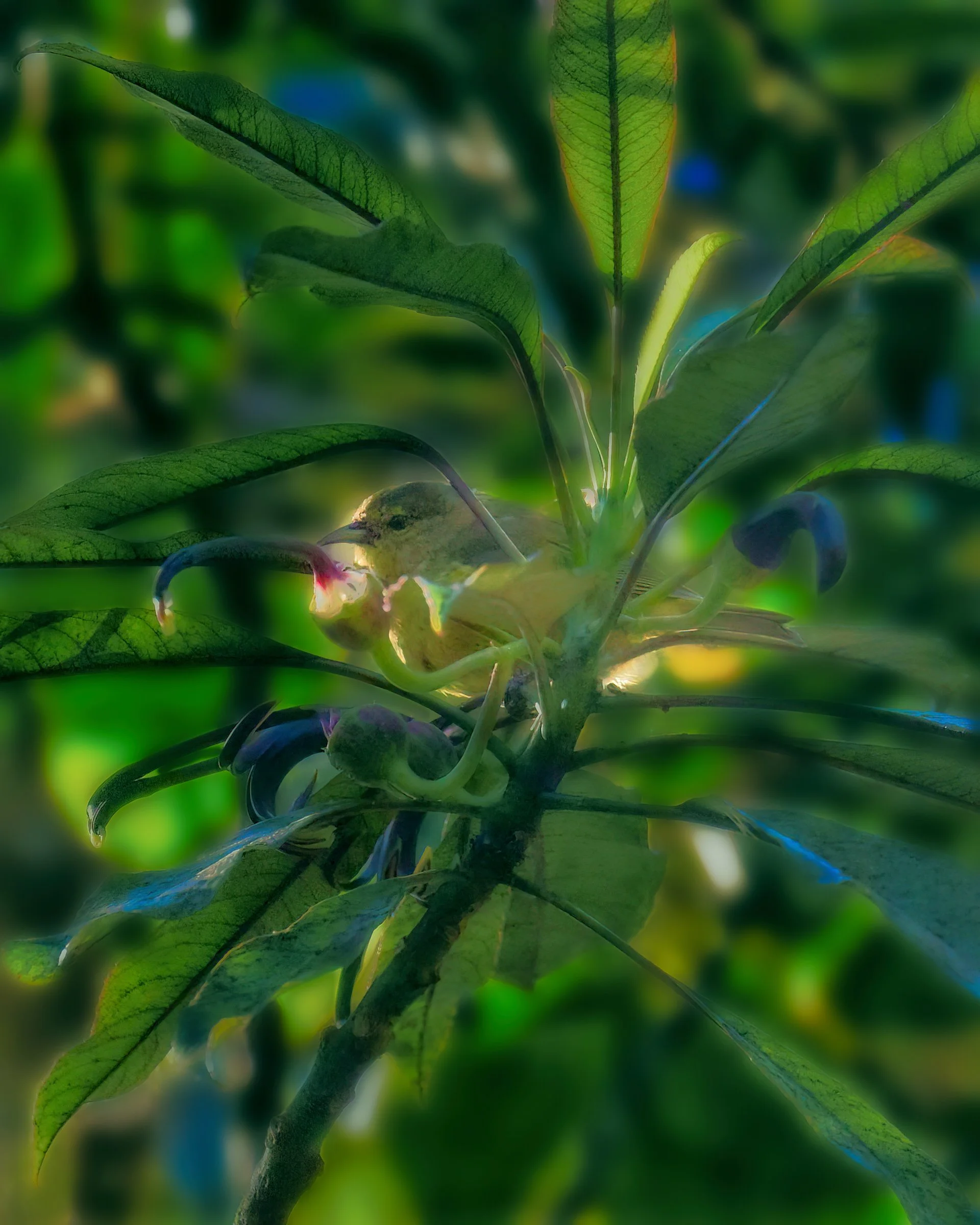
Hidden in Plain Sight—I was out taking pictures of native Hawaiian forest birds for an exhibit that only allows works of species of flora or fauna that are native to Hawai‘i Island. Spotting this 'amakihi (Chlorodrepanis virens virens), I took a few shots. Since I was in a native forest, I figured the plant was native also and because I am generally familiar with plants, I figured it would not be difficult to identify. I was in for a journey. After much research I discovered that the plant is native and is called ‘Oha Wai (Clermontia peleana). It was thought to be extinct as wild pigs severely damaged its habitat and none were thought to exist. Then one day someone found them growing high of the ground in the crux of tree branches. So not quite extinct, but very close to it. So when I took this shot, I thought I might have gotten a shot of the rare alawi, or Hawaiian creeper, which turned out to be a more common 'amakihi. Meanwhile, the truly rare thing was the plant that I figured was pretty common.
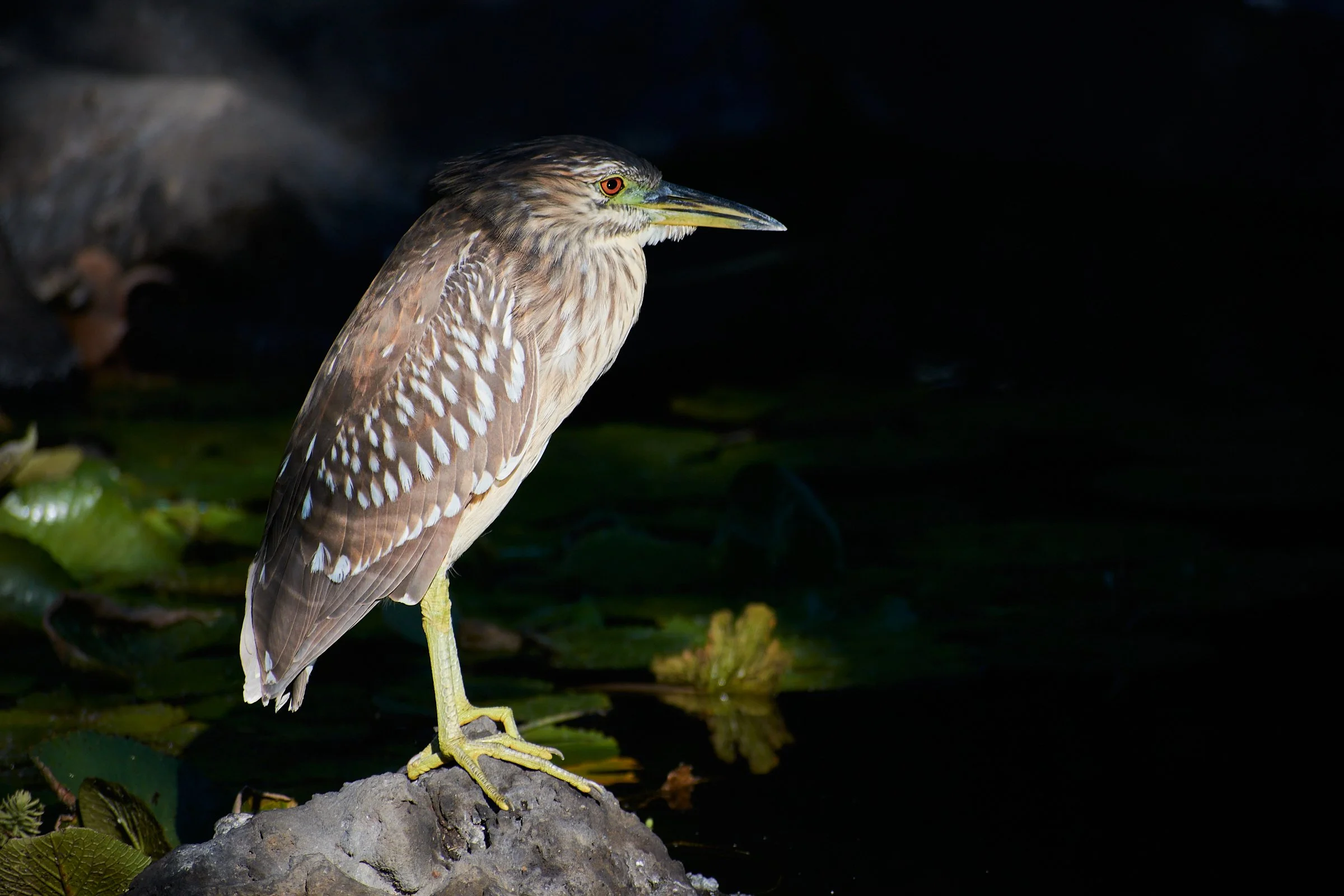
Young Sentry—An immature ‘auku‘u (Nycticorax nycticorax hoactli, or black-crowned night heron) stands watch over a koi pond, watching the fish go by, wondering if a meal can be had. ‘Auku‘u are indigenous to Hawai‘i, though can breeds on every continent other than Australia and Antarctica. Immature birds can be determined from the coloration of their feathers and the lack of the distinctive crown.
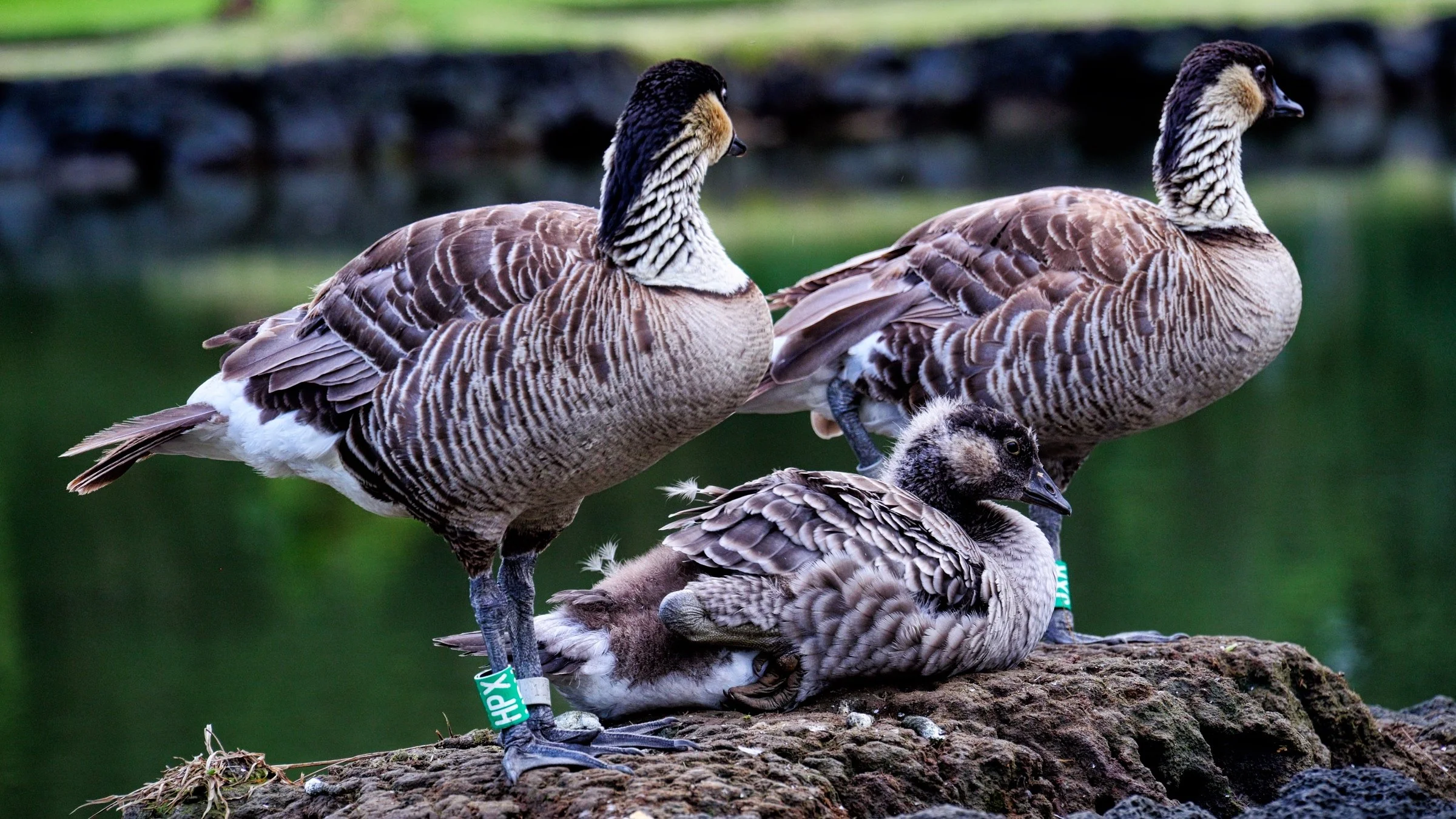
Family in the Park—The nēnē (Branta sandvicensis), also known as the Hawaiian goose, is endemic to the Hawaiian Islands and is Hawai‘i’s official state bird. It is the rarest goose in the world, with a population of 3,862 in 2022. It almost became extinct as the population in 1952 was only 30 birds. In 1958 the U.S. Congress passed a law authorizing the creation of a federal protection program for the nēnē. They breed well in captivity and were successfully reintroduced. In 2004 it was estimated that there were 800 birds in the wild and 1,000 in wildfowl collections and zoos. This photography provides a rare sighting of a nēnē gosling along with two adult nēnē.